Beginner’s Guide to Watercolour Supplies Vol.1: Tackling Mindset & Choosing Papers
Hi there, if you’re new to the watercolour scene, this must be one of the few burning questions on your mind!
Where do I start ?
How do I choose my supplies ?
There are a lot of watercolour materials and brands out there, but for a beginner with no knowledge of where to even begin, it’s easy to get overwhelmed. You can of course refer to reviews to get a sense of what you’re buying, but you have to first have some basic understanding before you can make an informed choice. Having gone through that whole process myself, I understand that frustration and feeling lost in the sea of choices, and this is why I am here to help.
In this 2 part series, I will touch on 4 topics: Tackling Mindset, Watercolour Paper, Paint and Brushes.
I will teach you the basics about watercolour materials and how you can use this knowledge to help you pick out your own set of painting supplies. By the end, you will
-
Have a basic understanding of the type of watercolour supplies
-
Be able to make an informed choice on your purchase
Are you ready? Let’s dive in!
Tackling Mindset
“Watercolour materials are so expensive!”
This is the most common sentiment I’ve heard about watercolour materials.
Yes, they are expensive, and the better quality it is, the more expensive it costs. It requires a shift in mindset because the further along you progress along the journey, you will begin to acquire more quality materials and it will cost you money.
“An artisan must first sharpen his tools if he is to do his work well.”
- Confucius
What Confucius meant was that for a person to do his work well, he must first acquire the right tools to aid him.
At this point I would like to clarify that I am not asking you to run outside and buy the most expensive supplies because that will turn you into a master painter. Even Dumbledore can’t make that happen, and we all know that man’s a genius. What I am asking you to do is to ask yourself this important question_
“Are you worth investing in?
This is an important question because it it something that will follow you throughout your entire art journey, when you are unsure if you should invest in better paper, better paint etc so that you can bring your skills to another level. It is much better to face this question head on now, rather than later. If you consistently answer “yes” to this question and keep on showing up everyday to practice and to learn, high quality materials can really make a world of difference to your painting experience, motivation and overall work quality.
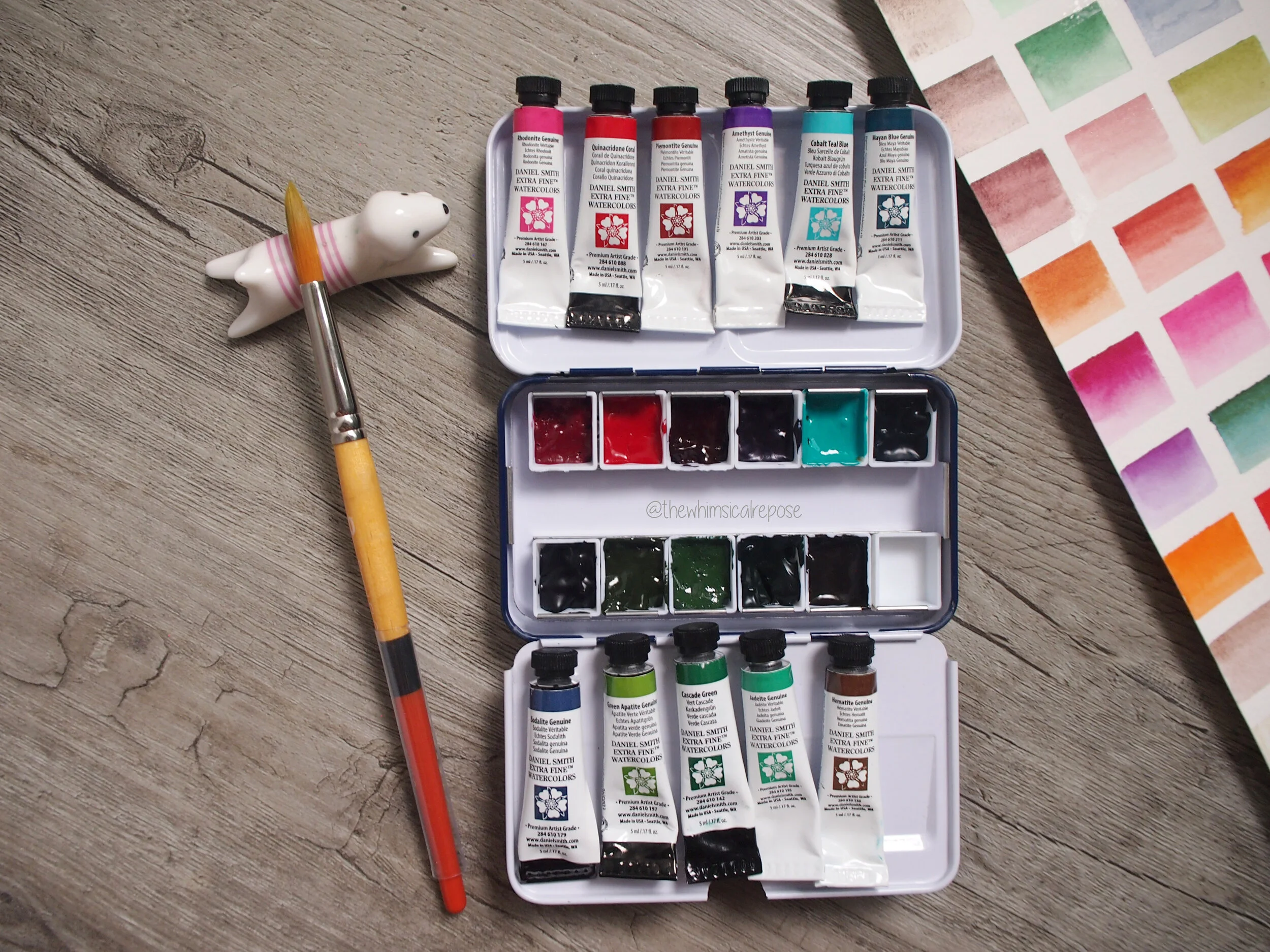
High quality supplies will give you high quality results.
You cannot expect a $2 Daiso watercolour paint set to perform as well as a $400 Sennelier paint set. The difference in price is there for a reason and it is reflected in the product. You can of course paint beautifully with the $2 Daiso set, but as with all creative work, it is the process and joy that we derive from it that keeps us going.
Sometimes we just have to admit that good quality products give us more joy and a better success rate, especially in the beginning stages where it’s easy to get frustrated because your painting does not look as vibrant or as translucent etc as the sample in the video tutorial you’re following. Trust me, the feeling of disappointment when you use the wrong or low-quality materials can really take a toll out on your still-budding confidence.
Good quality products eliminates any excess noise regarding material choices, so you can actually focus on learning to paint!
Watercolour Paper
[caption id="" align="alignnone" width="2500"]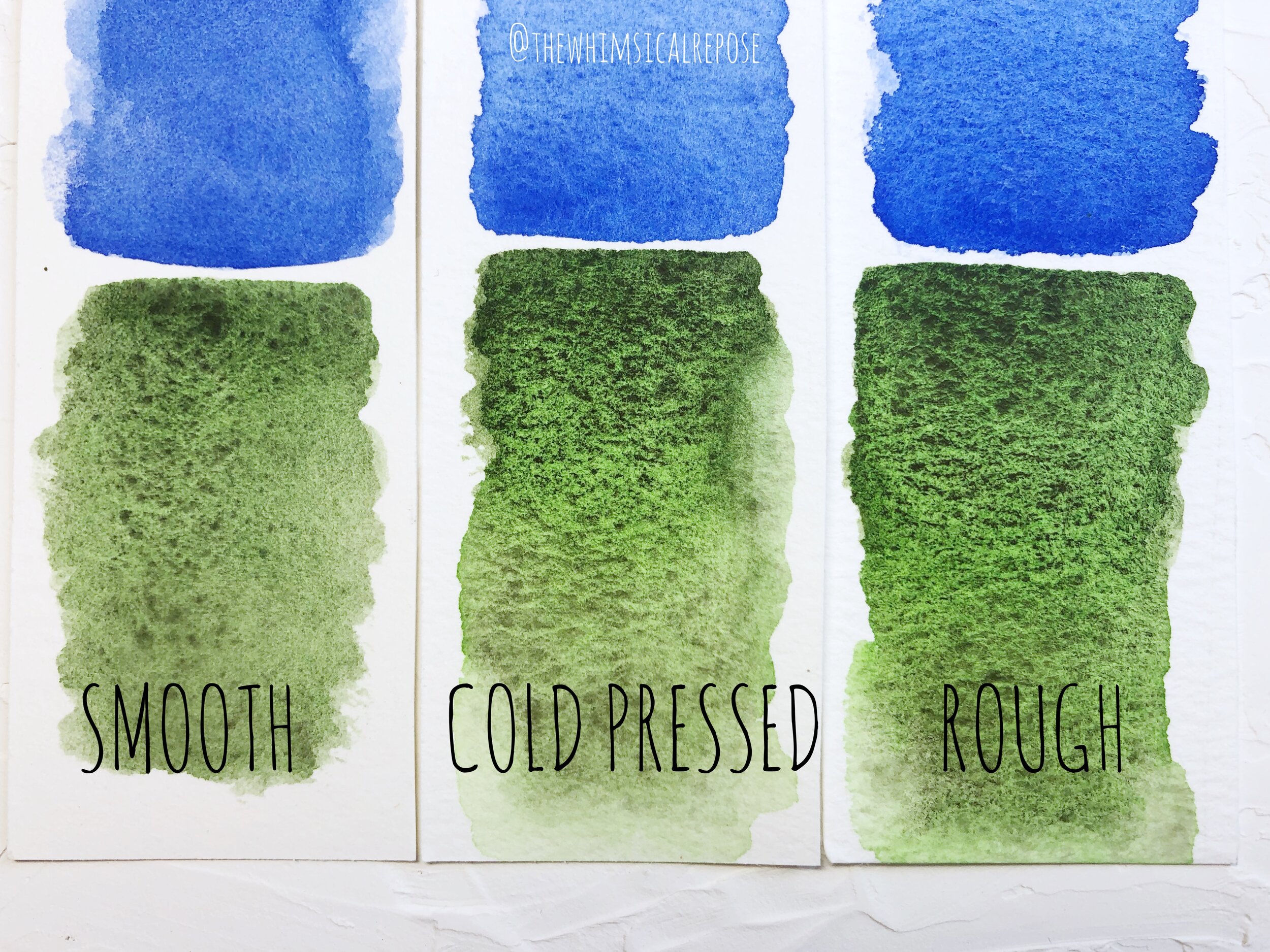 This sample has been painted on Bao Hong Watercolour Paper in three different textures using the same granulating paint from Daniel Smith. I chose a granulating paint because it tends to show the contrast more obviously when you want to compare paper types. [/caption]
SURFACE TYPES_
Hot-Pressed:
Smooth watercolour paper with almost no tooth. It is great for fine detail work and creating very smooth washes. This paper is popular with illustrators and designers as it gives a flat finish that is good for scanning and reproduction.
Cold-Pressed:
Medium textured surface that is in-between rough and hot-pressed paper, a versatile texture for various mediums.
Rough:
The most textured watercolour paper, with a lot of tooth and is good for showing off paint granulation as the pigments will settle in the tooth of the paper and give it an extra layer of interest. If you look at the picture above, you will be able to see that the paper texture gets increasingly rougher as you move on from smooth to rough, that is the tooth that gives texture to your paintings.
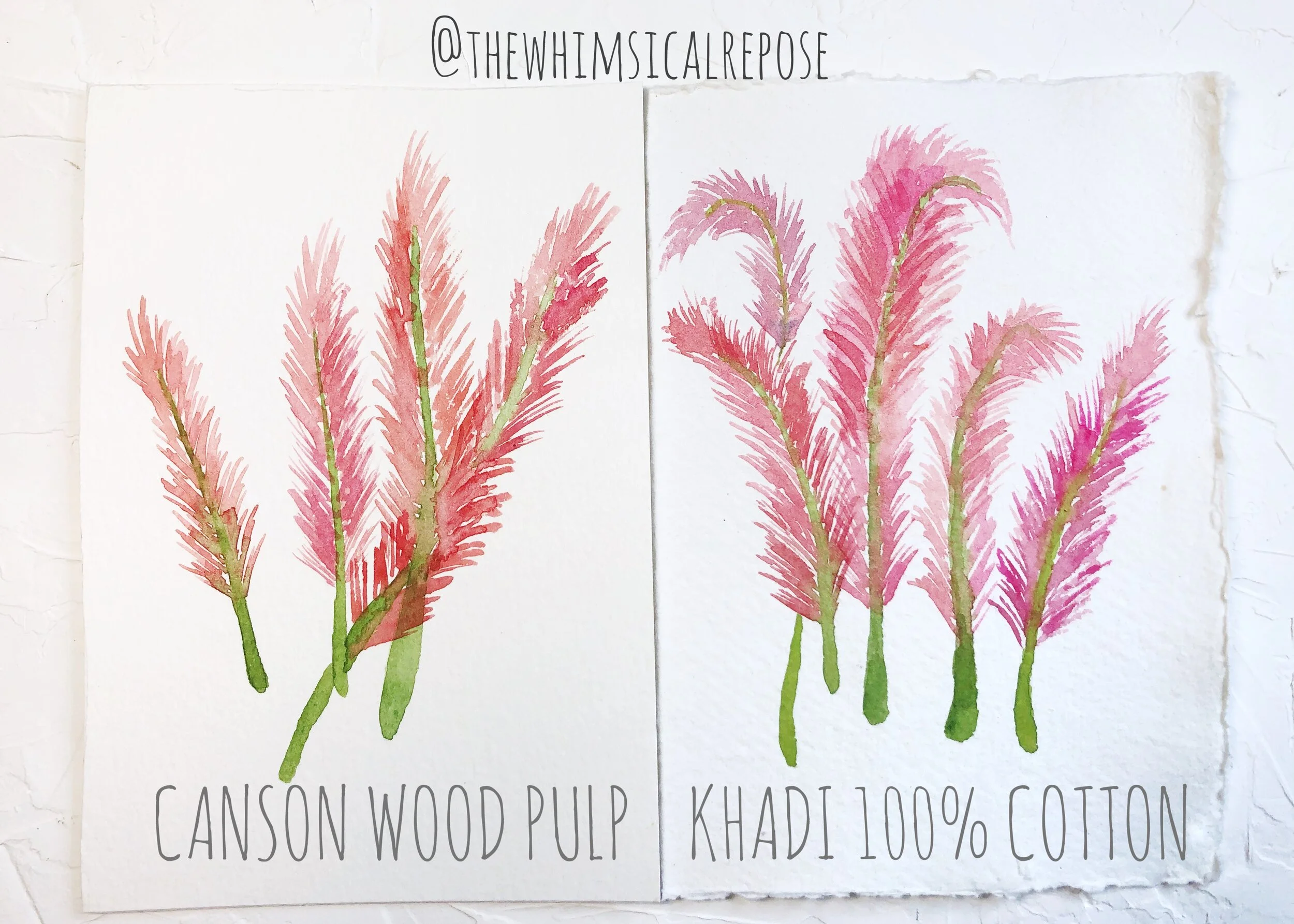
PAPER TYPES_
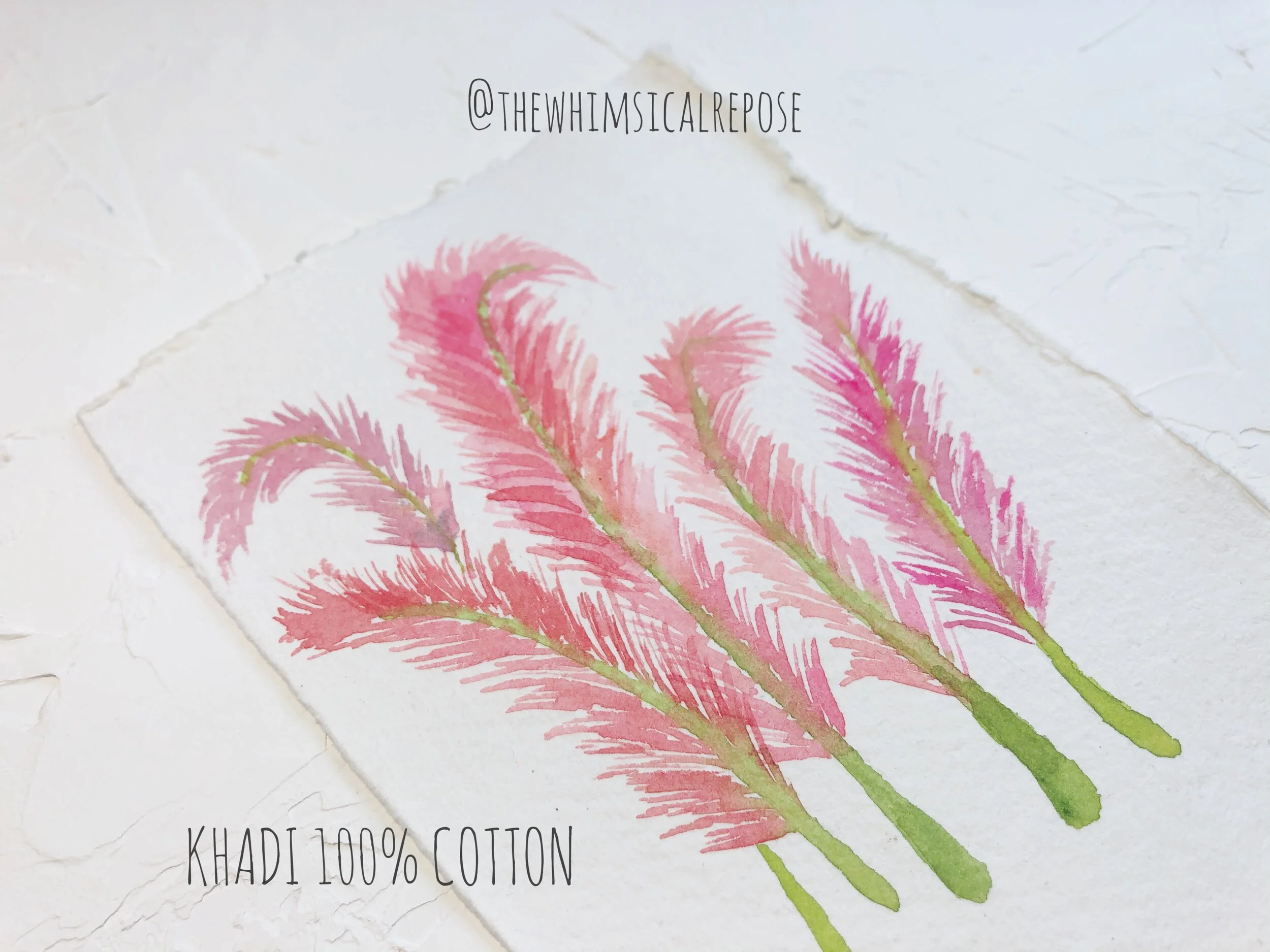
Cotton Watercolour Paper/ Cotton Rags_
Also known as 100% cotton paper, this is the highest quality watercolour paper sheets made with cotton. It is acid-free and has archival properties. It also reacts to watercolour in a way that keeps the colour more vibrant than a wood/cellulose-based paper.
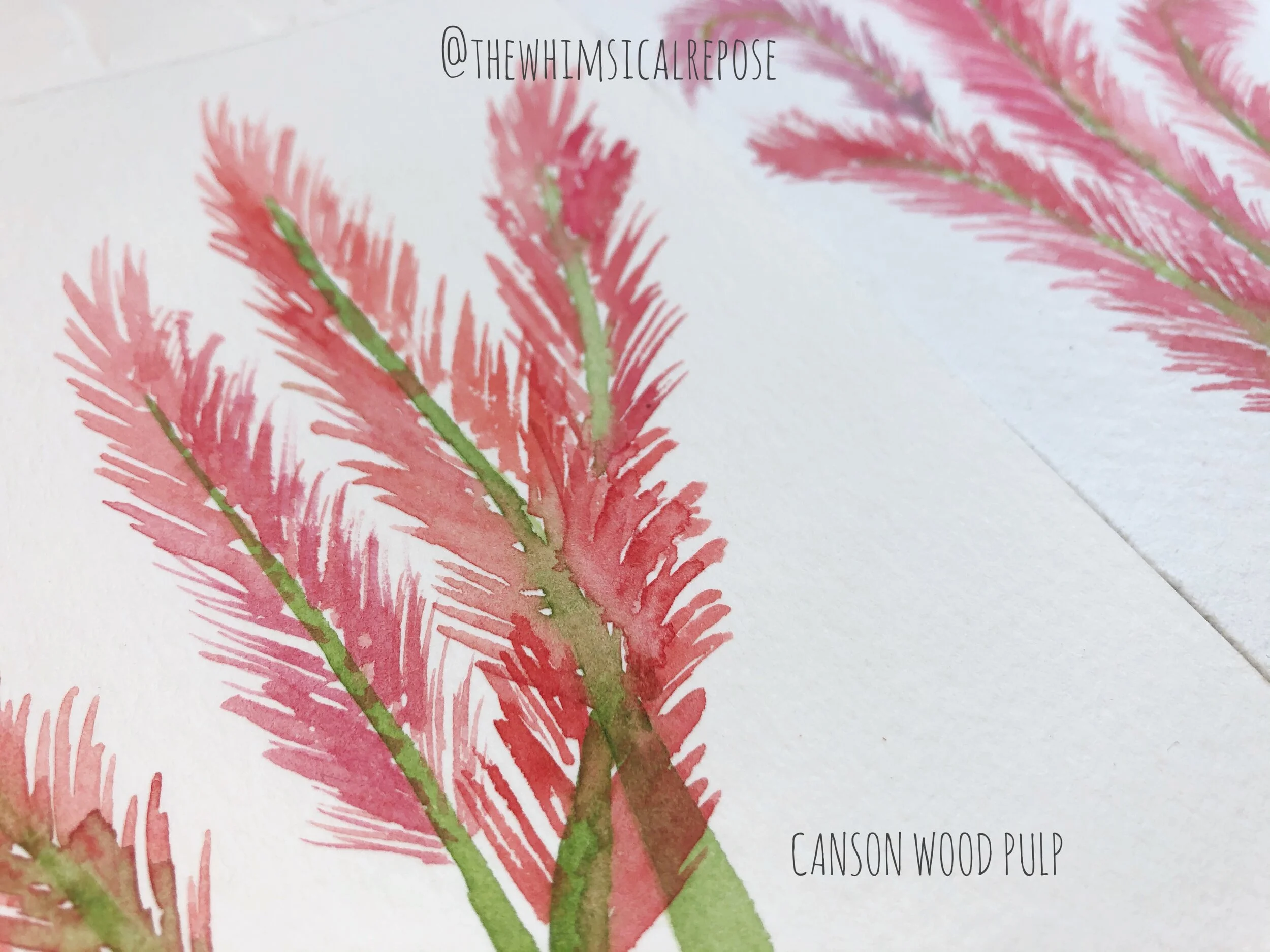
Wood/Cellulose Based Paper_
This type of paper is made from chemically treated wood fibres and is the more affordable paper option. However based on my experience, the colour vibrancy and overall painting experience with this type of paper does not match up to 100% cotton paper. It is however a good entry level paper choice for people just dipping their toes into painting.
Cotton & Cellulose Blend_
These are made from a combination of both cotton and wood pulp, which provides a compromise between quality and affordability. However I personally do not find that this option adds value for me, and given the choice will just pick an all cotton or all cellulose paper type.
PAPER WEIGHT_
I recommend the base minimum paper weight of 300gsm for any watercolour piece, because the lighter the paper, the more it warps and buckles. 300gsm is a decently heavy piece of paper for watercolour painting, of course there are both heavier and lighter options but 300gsm is the most ideal weight to use. I mostly use 300gsm papers for all my work now because it gives me the best results.
[caption id="" align="alignnone" width="2500"]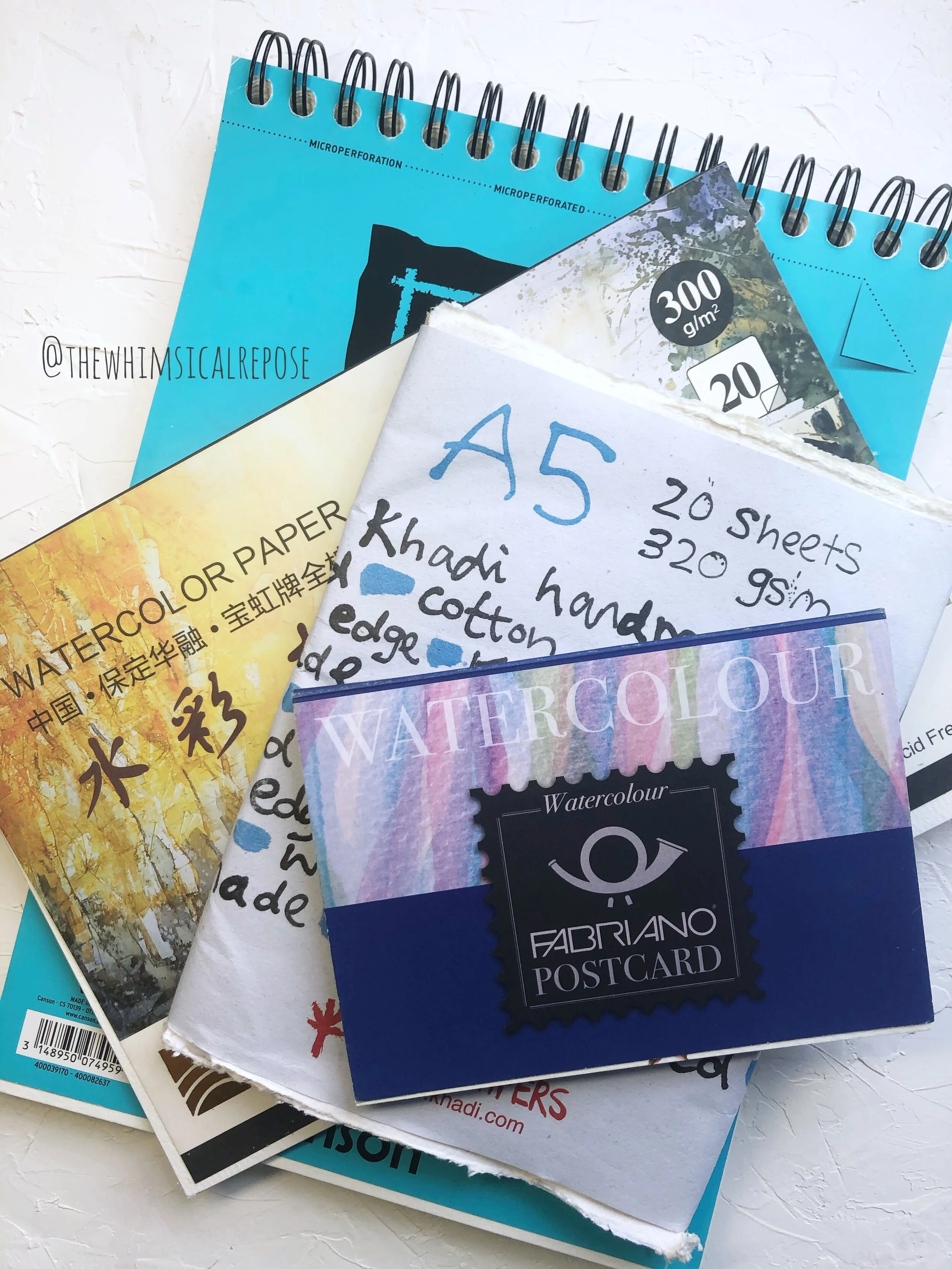 These are just some of the brands of paper I’m using and I encourage you to go and try as many types of paper as possible. What may work for some artists may not work for you. For example, I know some artists love using the Canson 100% cotton paper but some artists avoid it at all costs, so at the end of the day, after weighing all the pros and cons, it still comes down to personal preference. That’s why it is important to do your research and then try out the papers that interest you, this is how you find YOUR paper, the one that works for you and your paintings. [/caption]
To be continued…
Check out the next part Vol.2 to learn more about choosing paint and brushes!