Beginner’s Guide to Watercolour Supplies Vol.2: Choosing Paint & Brushes
Welcome back to Vol.2 of the Beginner’s Guide to Watercolour Supplies! Today we delve into the topic of choosing paint and brushes.
Paint
Artist grade VS Student grade
When it comes to shopping for paint, first ask yourself two questions. They will help narrow down your choices and make your decision making process so much easier!
-
“Artist quality (more expensive) or student quality (more affordable) paint?”
-
“Do you prefer pans or tubes?”
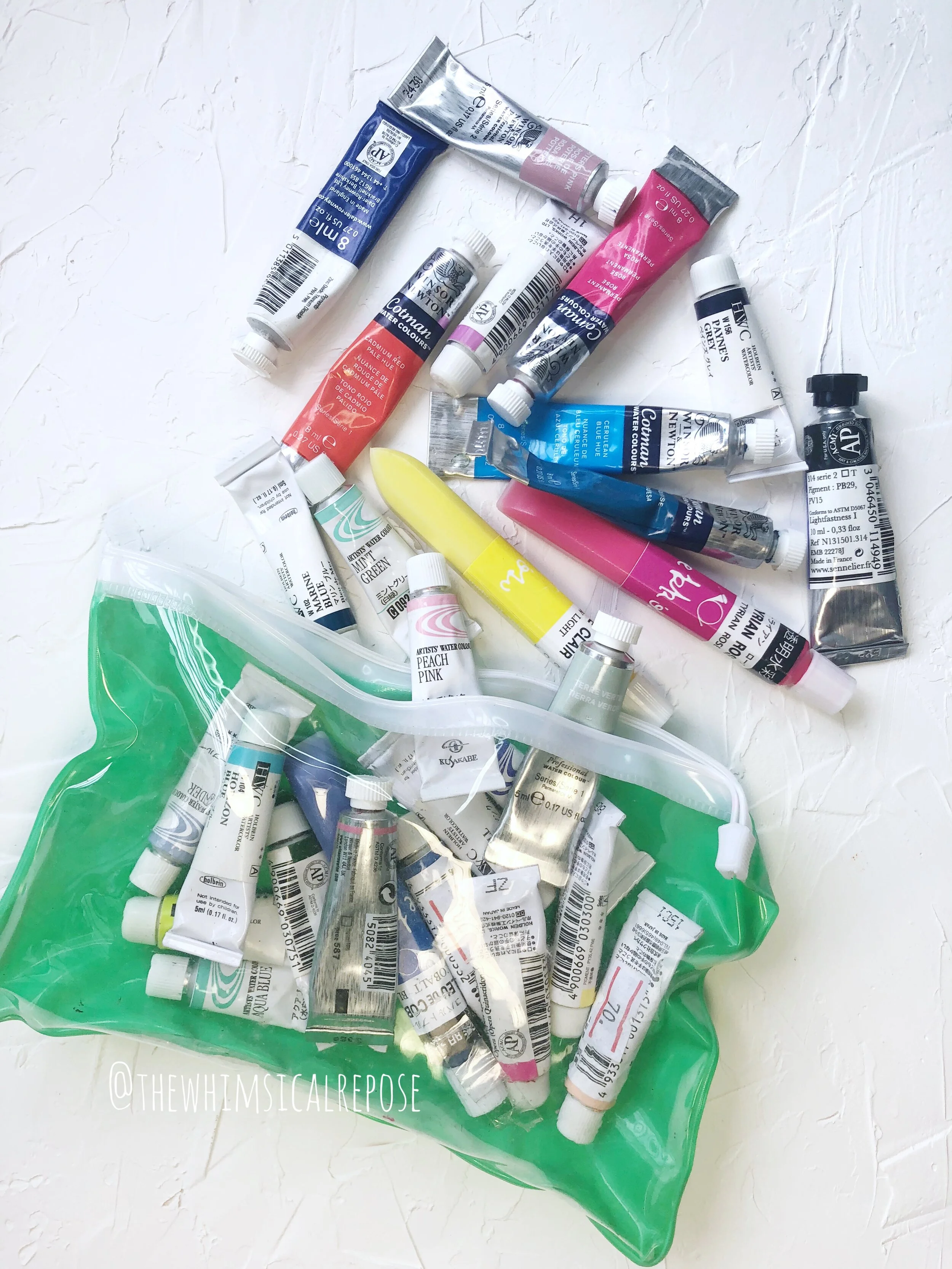
Artist Grade
PROS
-
Colours are more vibrant
-
The paints dilute and mix easily on demand, flow and mix beautifully on paper while retaining their value.
-
They’re usually light-fast and of archival quality, so the colours won’t fade over time (be sure to check the pigment information on the tube!)
-
FYI not all of them cost $400 a set, there are many affordable sets that sits in the middle of the spectrum, which will serve all your needs perfectly. Win-win for everyone!
CONS
-
More costly BUT you get what you pay for! If you have the budget for this, I say go for it! The results are amazing and you will not regret it.
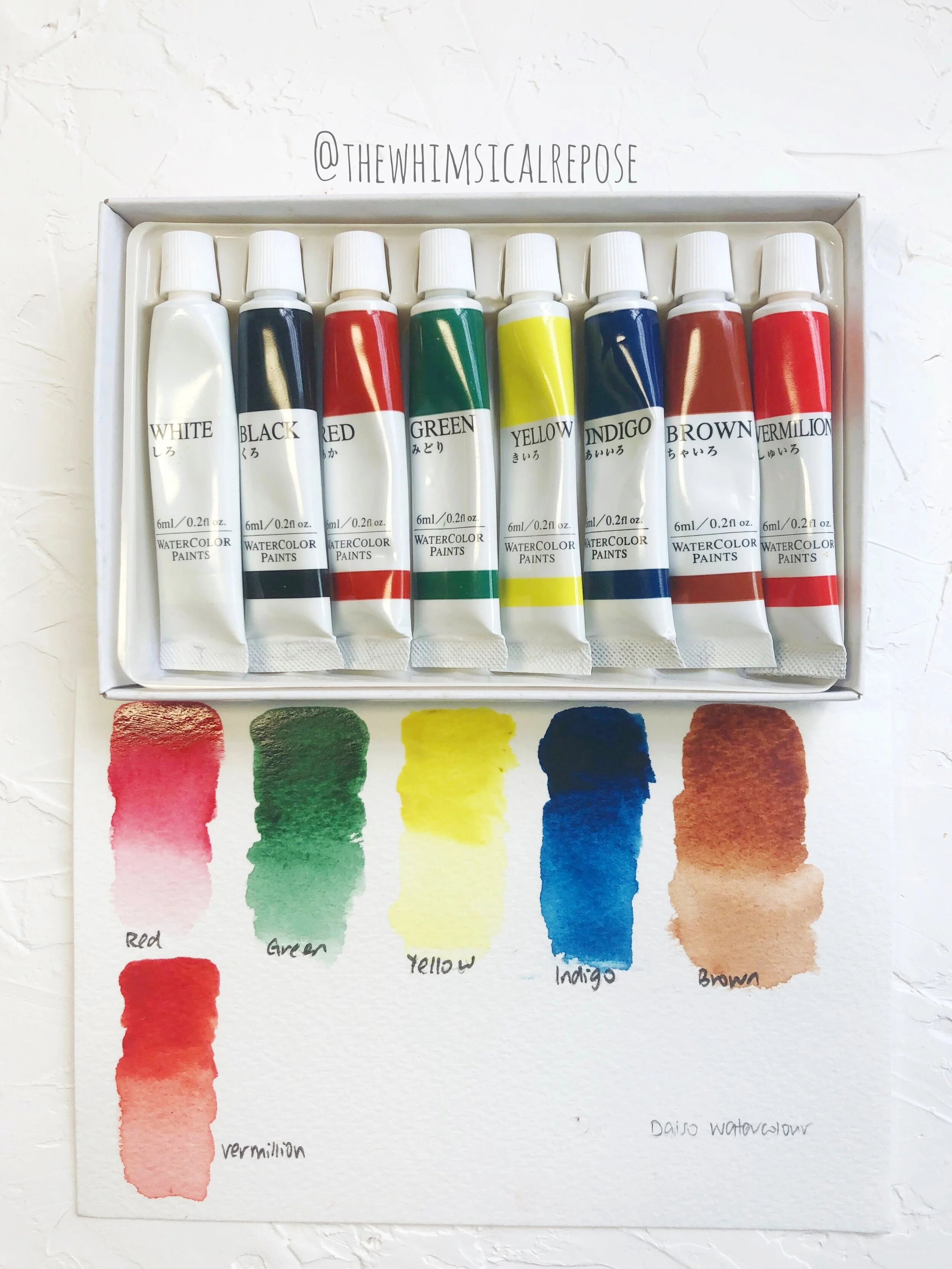
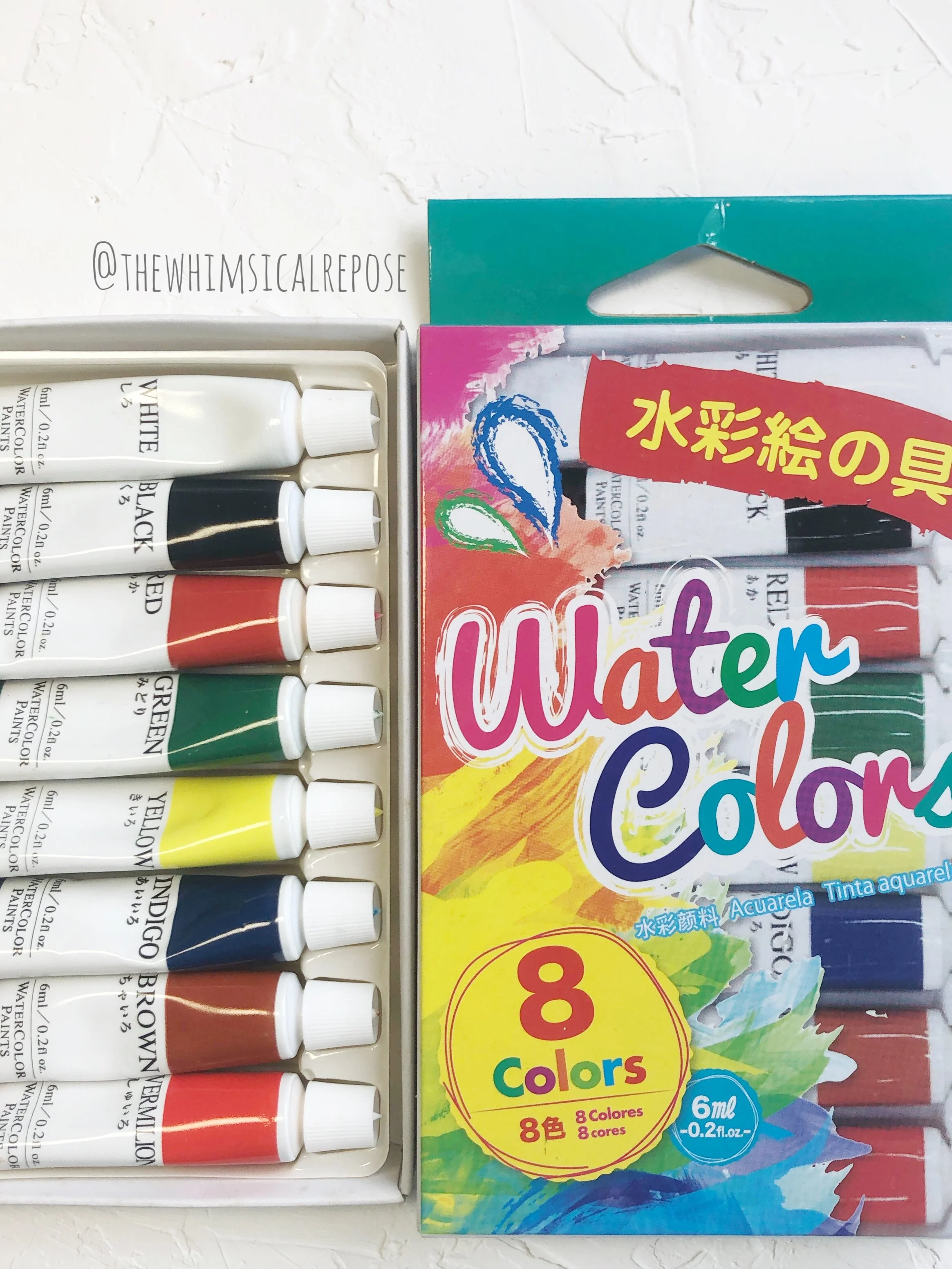
Student Quality
PROS
-
They are less expensive so it can be a good choice for someone on a tight budget.
-
They can also be useful for someone who only wants to paint occasionally, or for older children who want decent paint but don't need an expensive set yet.
CONS
-
Lack of variety in pigments. Some pigments are too expensive for manufacturers to use in student grade pigments, so they tend to use a cheaper version to mimic the colour. If you see the word “hue” after the name of the pigment, that is a substitute for the real colour!
-
It will not perform like the artist-quality paints simply because this is meant to be a more budget line, which means lesser quality materials, lower grade pigments, less single pigment colours which often leads to chalky and muddy results when you mix colours.
PANS VS TUBES
There really is no correct answer for this because its all up to personal preference, but of course I can break it down into a pro-con list to help you make the right choices!
[caption id="" align="alignnone" width="2500"] My first set of watercolour palette_ St Petersburg White Nights in the 24 box set. The colours in the middle row were added on later on when I purchased individual pans. [/caption]
PANS:
Watercolor paint in pans comes as rectangular cakes that are fitted into individual half or full pans. They're dry to the touch, but it reactivates when you put a wet brush to it.
PROS
-
It usually comes in a boxed set of 12, 24, 48, 72 colours so it’s convenient and easy for a beginner because the colours are pre-selected for you. If you’re just starting out, a 12 or 24 colour box set would be more than enough for you to start exploring and experimenting.
CONS
-
The colours are pre-determined so you can’t choose your own, and sometimes you can get colours that you don’t like/need/use in a boxed set.
[caption id="" align="alignnone" width="2500"]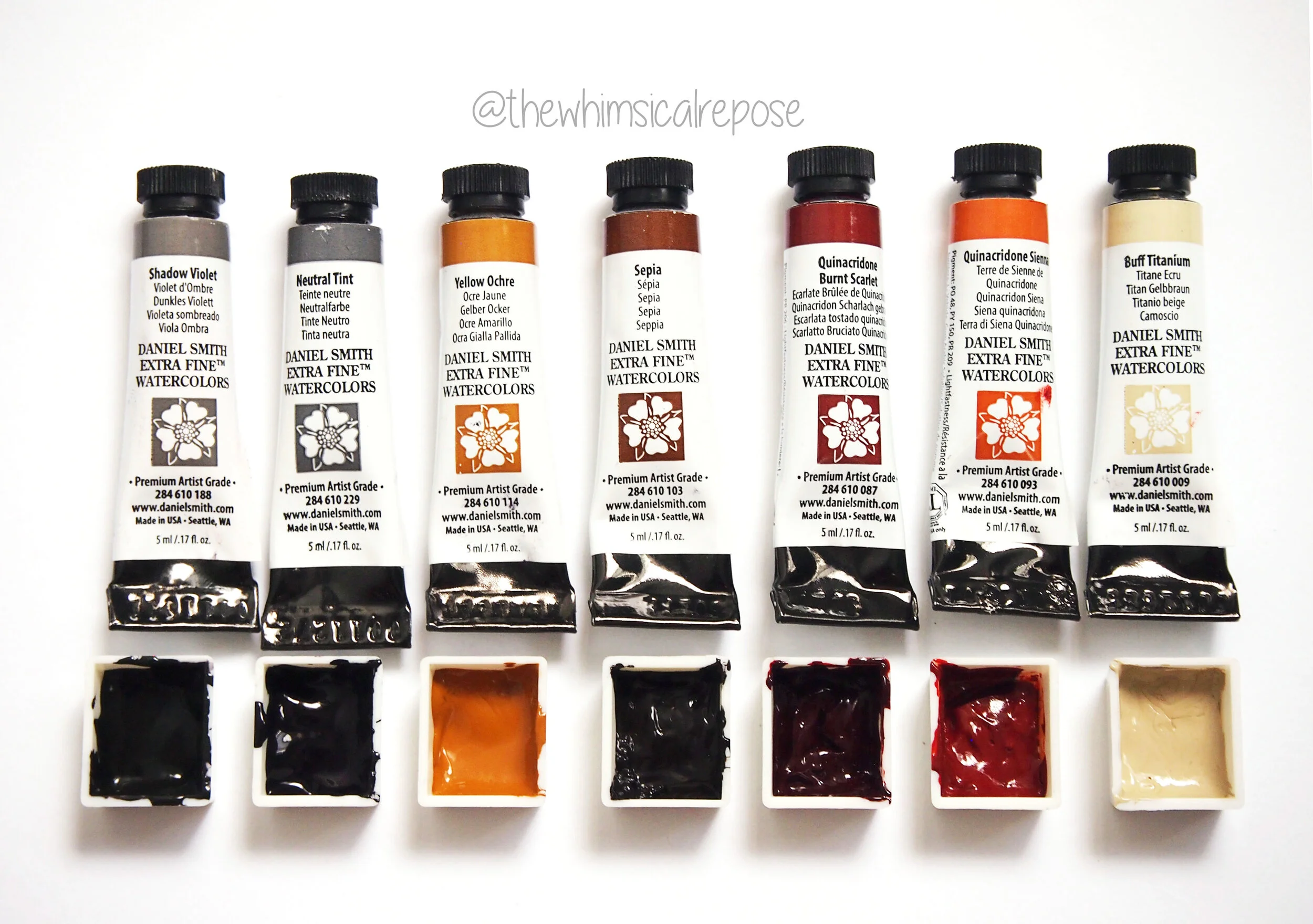 My Daniel Smith watercolour palette, also known as the crown jewel of my collection I believe they were not available in pans when I bought them, so I picked some colours and they came in tubes which I squeezed into empty half-pans. [/caption]
TUBES_

The paint comes in a tiny tube, like a travel size toothpaste tube. You squeeze it out onto a palette to use it or you can squeeze them into empty pans and wait for it to dry out, then use them as pans.
PROS
-
They sometimes come in a small set but are usually available as singular tubes so you have free rein to pick and choose the colours you want.
CONS
-
You will need a palette to squeeze the paint out on before you can use them, and if you enjoy using pans but like the flexibility of choosing your own colours from buying tubes, then you will need to purchase additional empty pans and box to keep the squeezed out paint. It’s extra work and some people may find that inconvenient.
BONUS TIP
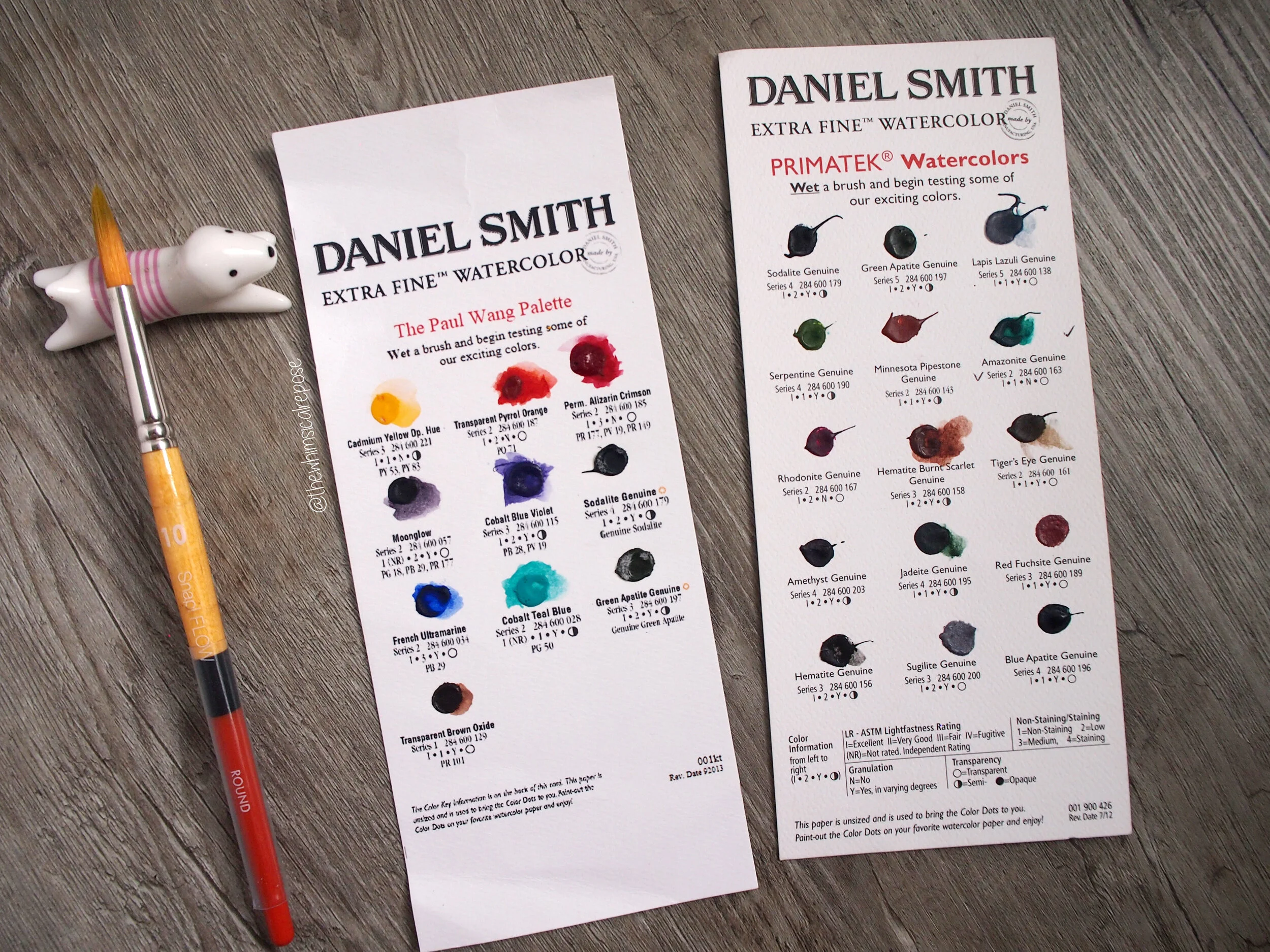
[caption id="" align="alignnone" width="2500"] If you want to try out a new brand of paint but don’t want to commit straightaway, getting a dot card is an excellent idea. You can find out if the brand sells a dot card of tiny paint samples and purchase them so you have the chance to try out the paints before you commit to buying a tube or a pan. [/caption]
Brushes
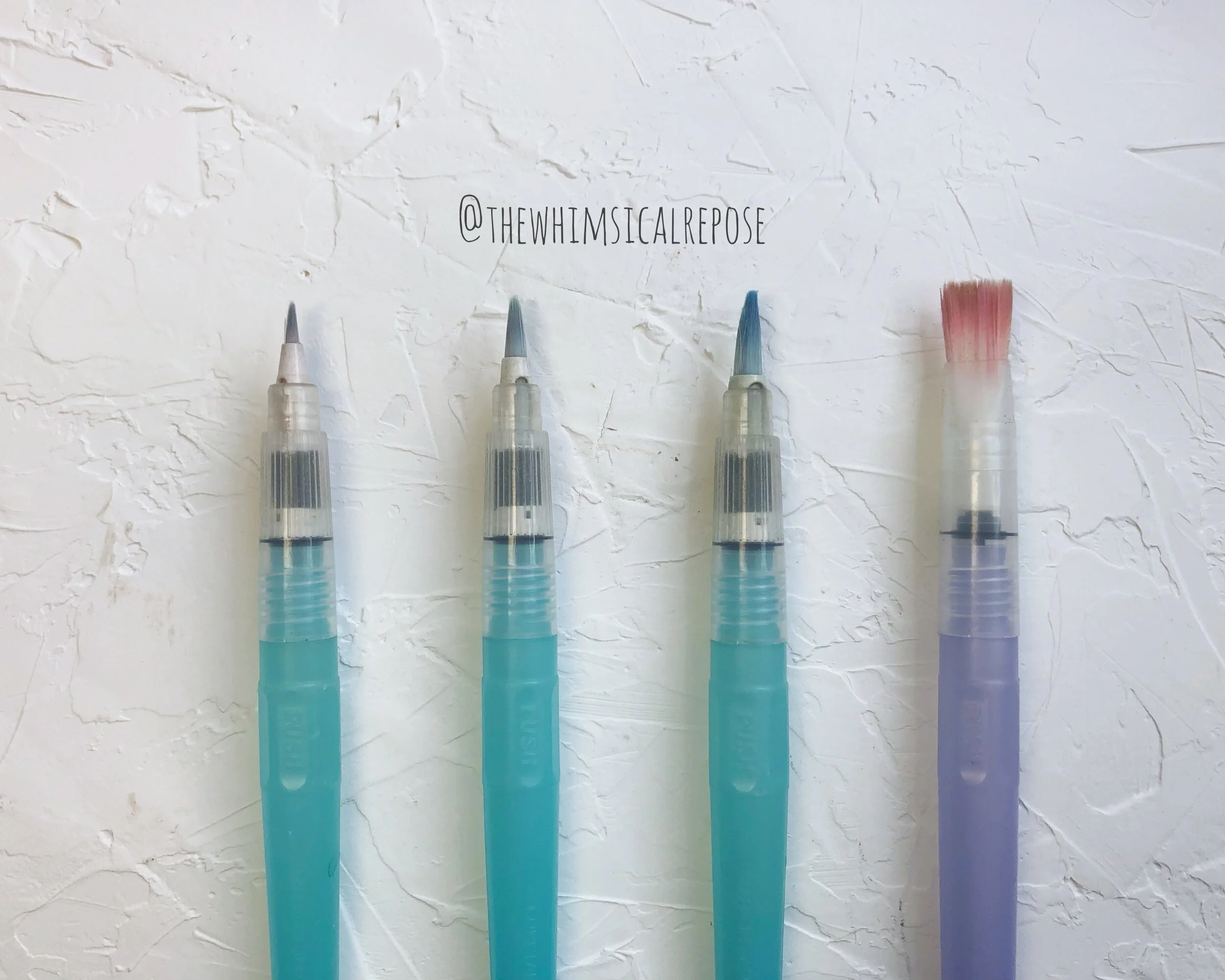
Water Brush
A water brush has a container or reservoir as its handle but it’s designed to hold water. It also has a cap to prevent any water leakage. When you use the waterbrush, you lightly squeeze the handle and water gradually seeps down from the reservoir onto the bristles. This means the brush bristles are permanently moist or damp. It can also be used to lift color directly from watercolor pencils or water soluble crayons.
PROS
-
It is the most affordable brush option available and comes in an easy to choose sizing guide_ small, medium, large, flat brush
-
It is very handy for travel because you don’t need to carry an additional water cup . Just squeeze the handle for some additional water and wipe it on a serviette to clean your brush while painting on the go.
CONS
-
I wouldn’t recommend this for beginners, because water control can get real finnicky with these brushes. Sometimes you get a sudden random blob that rolls down the bristles.
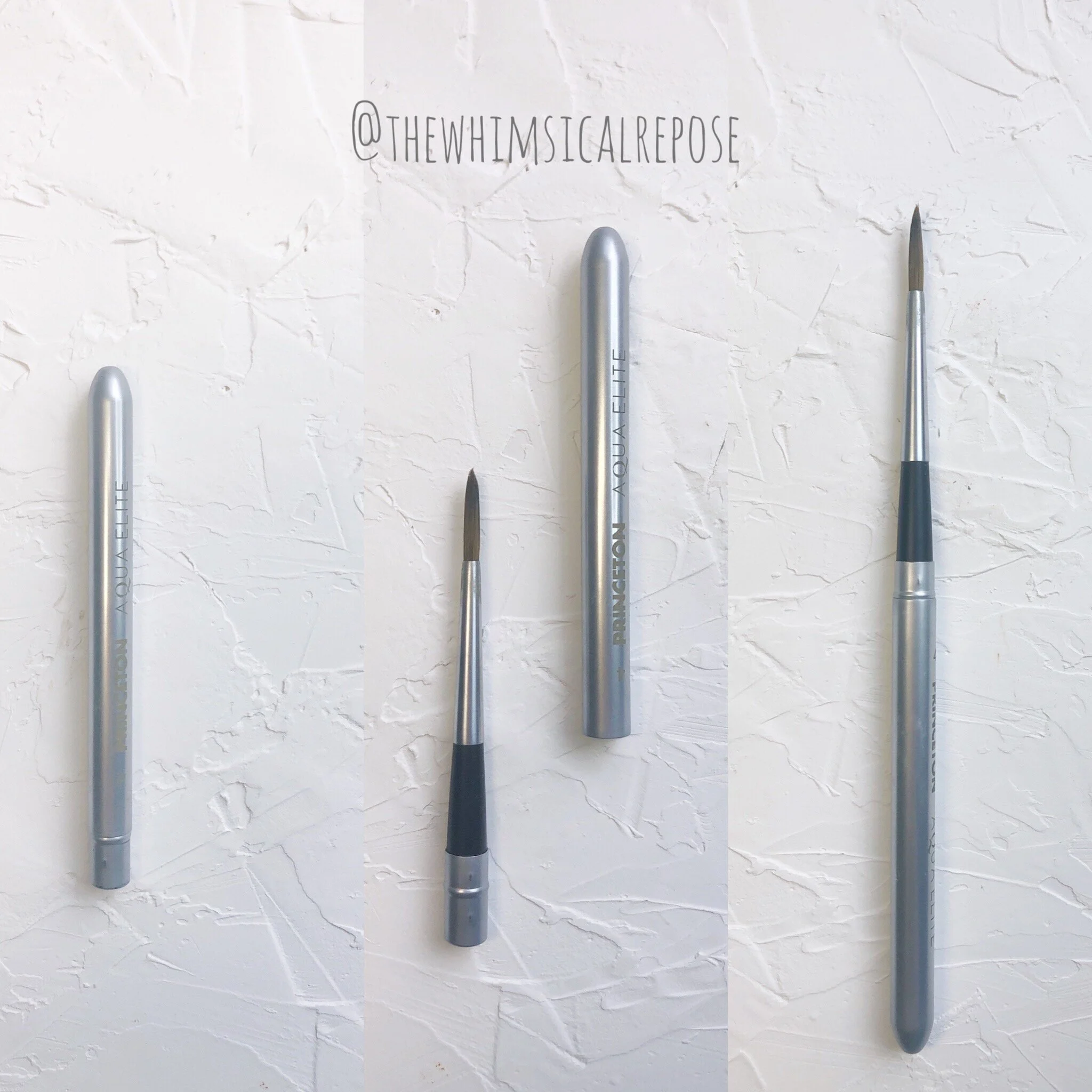
Travel Brush
A travel brush usually comes in two parts_ a short handle with a bristle end, and a cap that protects the brush. When the cap is removed, you cap at the end of the handle to extend the length of the brush handle for painting. When you cap the brush, it’s short and fits into pocket or even your palette so it’s convenient to bring it out for travel.
PROS
-
It’s a good quality brush that you can bring out for plein air or travel use. It’s a step up from the water brushes if you often paint on the go and enjoy doing plein air.
CONS
-
Only certain brands make them, and it’s usually part of a more premium line of brushes so it’s also more expensive.
Regular Brush
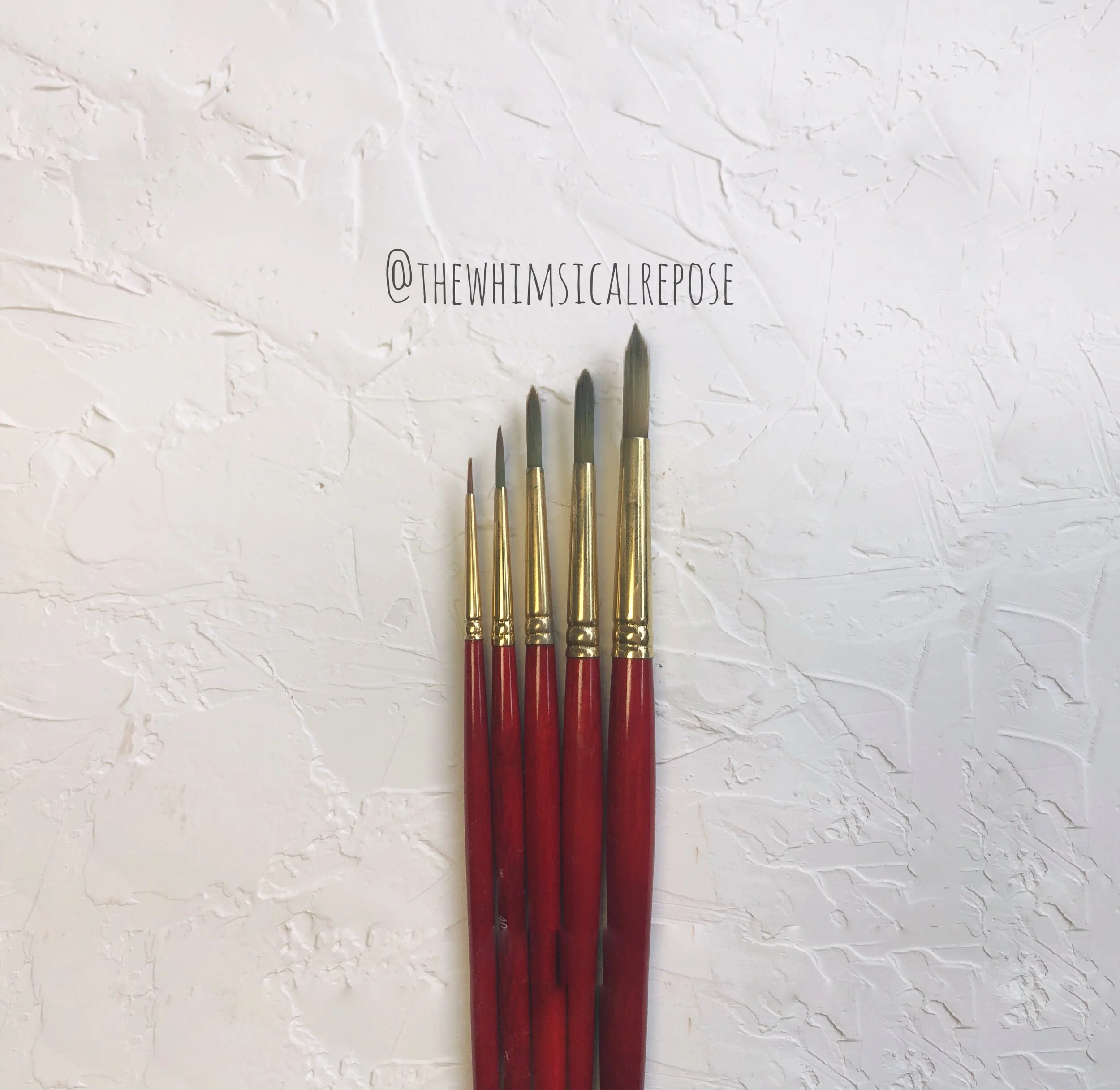
A regular brush has a wooden/plastic handle with various types of bristle shapes and materials. This is what I use on a daily basis and the good thing is there are many brands and different price points to suit your individual needs and usage.
When you first start researching brushes, you might stumble onto terms such as synthetic bristles and natural bristles. While it is entirely about personal preference, I have never used a natural bristle brush simply because it is wayyyyyyy too expensive. For example, the Winsor & Newton Kolinsky Sable brushes are made from the finest Kolinsky Sable hair and they can cost over $300 each. I am of the opinion that if you have a good synthetic brush, it will serve you well enough.
I have tried a variety of brushes but now I predominantly use the Princeton Heritage 4050 Series Round Brushes. They are my most used and favourite brushes, and even though it’s a synthetic brush, it is extremely well made. If you take care of them, they can last a long time. The best part is you don’t have to worry about emptying your wallet to replace them because they’re so affordable! These brushes have a lot of snap, they hold their form well, are able to hold water and they have nice fine tip for all the tiny details. I mostly use round tip brushes and love them because it’s versatile and takes me from landscape painting to fine detailing food illustrations.

Conclusion
You may not want to start with such expensive materials in the beginning, and that is totally understandable! But keep in mind that student grade supplies can only take you so far. It’s meant to get you started on your journey, and not something to use throughout your entire journey. After a while, you may feel that your skills have improved to the point where the limitations of student grade supplies frustrate you and you feel ready to venture into the world of artist quality paints.
REMEMBER THIS_
YOU GET WHAT YOU PAY FOR.
一分钱一分货
(If you can understand Chinese, because important information deserves to be repeated in multiple languages)
It is so much easier to track your progress when you already have good quality materials, so if your financial means allow you to do so, choose to invest in better materials and choose to invest in yourself. Save yourself the time, agony and frustration so you can focus on upgrading your skill because YOU ARE WORTH IT.